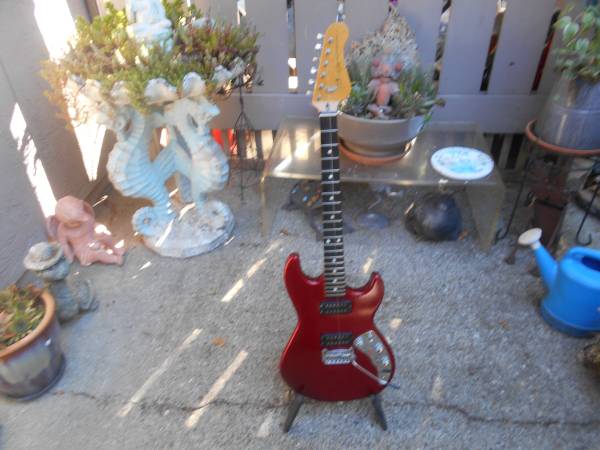
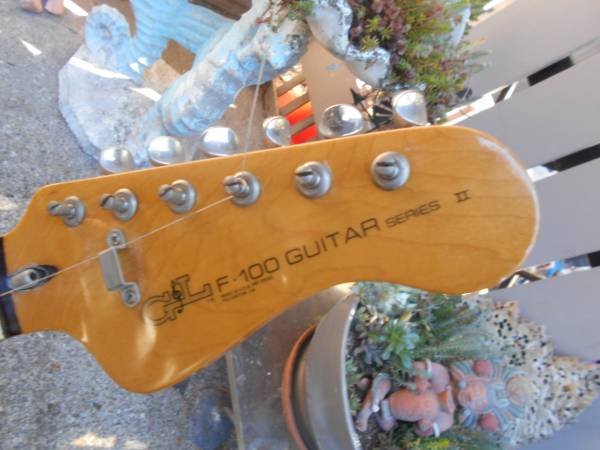
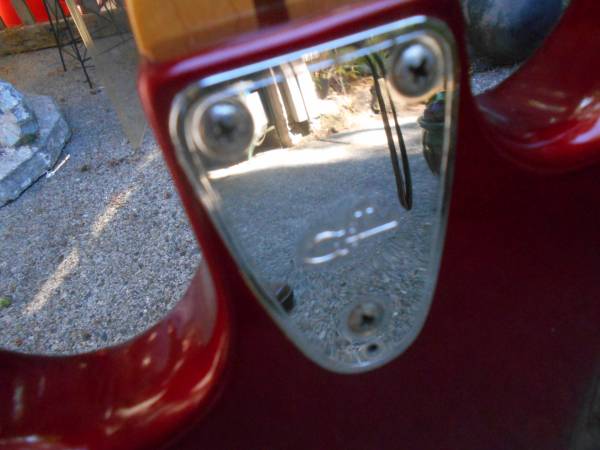
1980/81 G & L Early Model F-100,Series ll, Serial No: G0000596 W/ Passive Humbucking pickups = Just back from being checked / serviced /pots cleaned, new strings/set up by our local luthier
George Fullerton, & Leo Fender Collusion G & L
May consider a Martin D 35in VG condition in trade
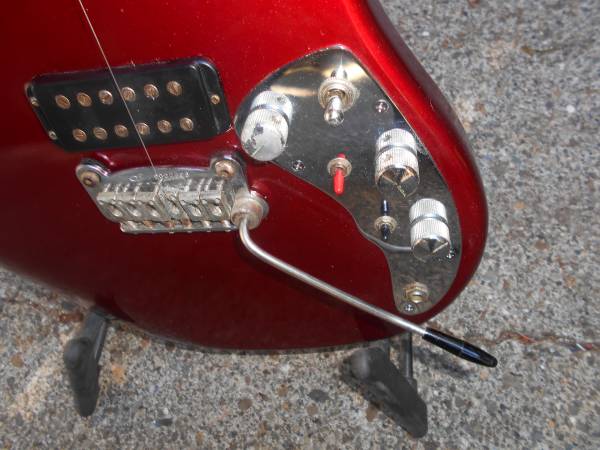
Leo Fender is no longer making guitars. This was his 'last hurrah'. This guitar has been unchanged and has a PLETHORA of options: Polarity swapping, pick-up splitting, phase-shifting, pole-adjusting's, whatever, whatever... like I said, I'm an acoustic player (Do some research - there's a nice G&L release from '80 / 81 that describes each switch and what it does; There is also a TON of information about the versatility of this guitar). I had luthier remove the neck & pots to verify dates, assembly, and authenticity. There is ALOT of information about the F100 -- and I'm sure (if you're reading this) you're aware of what this guitar is and why it is priced accordingly
Looking for a fresh start, Music Man was sold to Ernie Ball, the renowned Hawaiian guitarist and, later, string maven. Ernie Ball’s Music Man guitars continue to be built to this day. After the sale, Leo partnered with another longtime associate, George Fullerton, to found G&L Music Sales, Inc., named for George and Leo. G&L’s first instruments were the F-100 guitar and L-1000 bass introduced in 1980. Again, Leo never strayed far from his original creations… but the differences lie in the details.
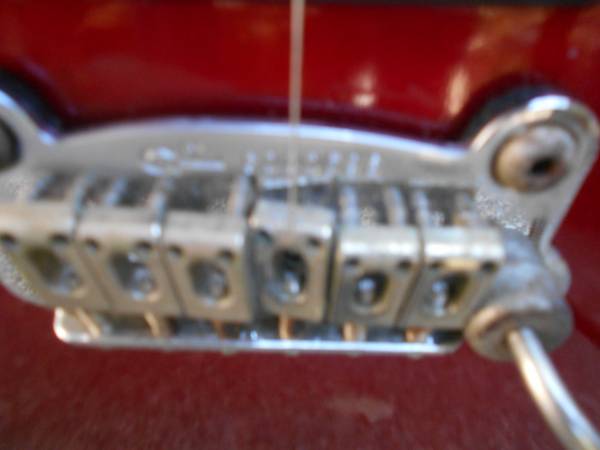
There were quite a few variations on the F-100. The F-100-I and F-100-II (sometimes called the “first series” and “second series”) had different fingerboard radii (71/2″ or 12″), an option Leo developed at Music Man. All necks were figured maple with either an ebony or maple fingerboard. The scale was 251/2″. Yes, Martha, they only had three bolts! This actually made things easier because the necks had a neck-tilt adjustment to select the action. Natural-finished models featured ash bodies. Sunburst models had mahogany bodies. If you ordered a custom color, it came on a poplar body. All models came with either a fixed bridge or a newly patented adjustable vibrato.
The biggest distinction, however, was in the electronics, which could be passive or active. All featured new Magnetic Field Design humbucking pickups with two rows of adjustable hexagon-shaped polepieces and ceramic magnets. The passive versions gave a standard three-way select plus a phase switch that threw the pickups into a combination out-of-phase middle position. The active versions added a second “splitter” function, which was a coil tap. When selected, both pickups became single-coils. To compensate for the loss in bass response, these guitars kicked in some extra bass compensation with the active circuitry.
This is clearly a professional-grade guitar, extremely well made with a lot of thinking put into the design.
If guitars are in your blood – really in your blood – you can’t walk away from them. That was certainly the case with Clarence Leonidas Fender, born August 10, 1909 (100 years ago), in Fullerton, California. There’s no point in cataloging Leo Fender’s contributions here. If guitars are in your blood, you know his story. Certainly, no brand is more recognizable than Fender. However, there are other names on the musical landscape that are not so obviously the children of Leo Fender, as represented here by this G&;L F-100-ll.